
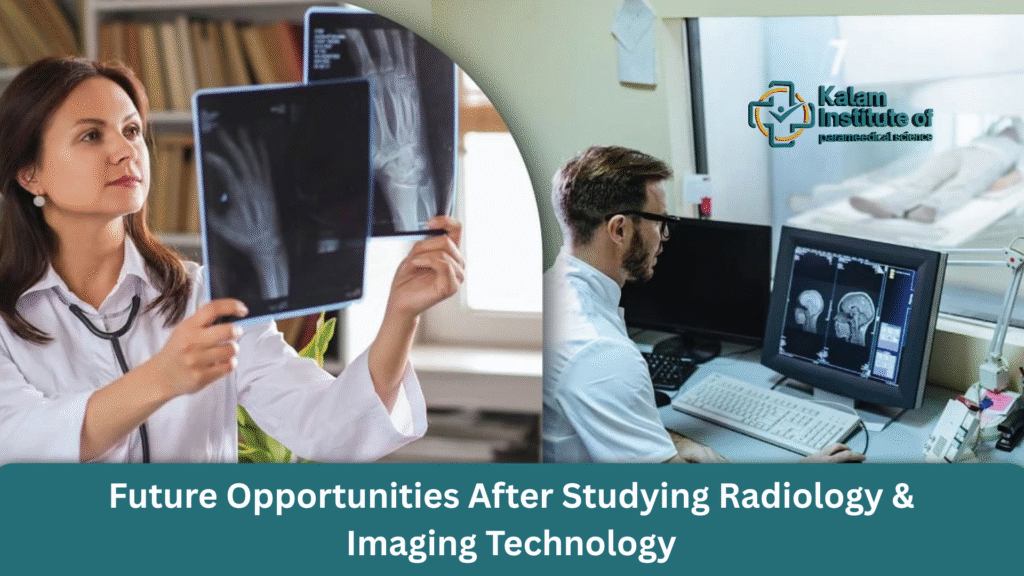
Future Opportunities After Studying Radiology & Imaging Technology
What Is Radiology?
Radiology is the branch of healthcare that uses imaging techniques like X-rays, CT scans, MRI, ultrasound, and nuclear medicine to diagnose and monitor medical conditions. If you’ve ever seen an X-ray film after a bone injury, you’ve already experienced the impact of radiology in medicine.
Importance of Imaging Technology in Modern Healthcare
Healthcare today is incomplete without accurate diagnostic imaging. Whether it’s detecting fractures, diagnosing cancer, or monitoring internal organs, imaging plays a crucial role in fast and accurate treatment. This growing dependency makes radiology one of the most promising careers in the medical field.
Skills Acquired Through Radiology & Imaging Courses
Technical Expertise
Students learn how to operate complex imaging equipment, interpret images, maintain machines, and follow radiation safety guidelines.
Patient Care Skills
Radiology professionals communicate with patients, guide them during scans, and ensure comfort and safety.
Knowledge of Medical Imaging Software
Training includes handling advanced imaging software, PACS systems, and digital radiography tools.
Career Opportunities After Radiology & Imaging Technology
Radiology Technician
Works directly with radiologists to conduct imaging procedures including X-rays and fluoroscopy.
MRI Technician
Specializes in Magnetic Resonance Imaging, one of the most advanced imaging techniques.
CT Scan Technician
Operates CT machines to capture detailed cross-sectional images of the human body.
X-ray Technician
A fundamental role involving routine X-rays required in almost every healthcare setting.
Sonographer or Ultrasound Technician
Uses high-frequency sound waves to examine organs, detect pregnancies, and diagnose conditions.
Mammography Technician
Performs mammograms to detect early signs of breast cancer.
Interventional Radiology Technologist
Assists in minimally invasive procedures guided by imaging.
Radiation Therapy Assistant
Supports oncologists in delivering targeted radiation to cancer patients.
Employment Sectors for Radiology & Imaging Professionals
Government Hospitals
Stable jobs with benefits like pensions, job security, and structured salaries.
Private Hospitals
Fast-growing sector offering competitive pay and advanced technology.
Diagnostic Imaging Centers
Modern diagnostic centers heavily rely on trained imaging professionals.
Research Laboratories
Institutions studying new imaging techniques hire skilled technologists.
Tele-Radiology Companies
Remote radiology allows professionals to work with doctors globally from anywhere.
Medical Equipment Companies
Companies like GE, Philips, and Siemens hire technologists for technical support, training, and machine handling.
Higher Education Options After Radiology & Imaging
BSc / MSc in Radiology
Deepens your understanding and opens doors to teaching and supervisory roles.
PG Diploma in Advanced Imaging
Ideal for specializing in MRI, CT, or Ultrasound.
Certification Courses
Short-term certifications help advance your expertise in:
- CT
- MRI
- Ultrasound
- Radiation safety
Specialization in Nuclear Medicine
A high-demand field focusing on radioactive imaging techniques.
MBA in Hospital Management
Suitable for those interested in administrative and leadership roles.
Future Scope and Industry Trends
Growing Demand for Imaging Professionals
With increasing lifestyle diseases and aging populations, diagnostic imaging is essential for accurate treatment.
Increasing Use of AI in Medical Imaging
AI tools now assist in image analysis, making early diagnosis faster and more reliable—creating new job roles for tech-savvy professionals.
Rise of Personalized and Preventive Healthcare
More people are opting for preventive screenings, increasing demand for imaging services.
Tele-Radiology as a Global Career Option
Remote diagnosis allows imaging professionals to work internationally without relocating.
Expansion of Diagnostic Centers
New diagnostic labs and hospitals are opening in both urban and semi-urban areas, increasing job availability.
Salary Expectations After Radiology & Imaging Technology
Entry-Level Salary
Freshers may earn between ₹15,000 to ₹25,000 per month.
Mid-Level Salary
With 3–5 years of experience, salaries can rise to ₹30,000 to ₹50,000 per month.
Senior-Level Salary
Highly skilled imaging technologists and supervisors can earn ₹60,000 to ₹1,00,000 per month.
Factors Influencing Salary
- Experience
- City and type of hospital
- Specialization (MRI, CT, Ultrasound)
- Certifications and skill level
Advantages of Choosing Radiology & Imaging Technology
High Job Security
Healthcare professionals remain in demand regardless of economic conditions.
Opportunities for Specialization
You can specialize in MRI, CT, ultrasound, or nuclear medicine based on your interests.
Professional Growth in Healthcare
Imaging professionals often move into teaching, management, or advanced diagnostic roles.
Challenges in the Field
Shift-Based Work
Hospitals operate 24/7, so technicians may have night or weekend shifts.
Continuous Technological Updates
New machines and techniques require ongoing learning.
High Responsibility Environment
Accurate imaging is crucial for patient diagnosis—mistakes are not an option.
Tips to Build a Successful Career in Radiology
Upgrade Skills Regularly
Stay updated with the latest imaging advancements.
Get Certified in Advanced Modalities
Certifications in MRI, CT, and ultrasound boost career opportunities.
Focus on Patient Communication
Good communication builds trust and improves patient experience.
Gain Hands-On Hospital Experience
Practical exposure is more valuable than theory.
FAQs
1. Is Radiology & Imaging Technology a good career?
Yes, it offers high demand, good salary, and excellent future growth.
2. What is the salary after completing a radiology course?
Freshers earn ₹15,000–₹25,000 monthly, while experienced professionals earn much higher.
3. Can I specialize after completing my radiology degree?
Absolutely. Specializations in MRI, CT, ultrasound, and nuclear medicine are very popular.
4. Can I work abroad after studying radiology?
Yes, imaging professionals are in demand globally, especially in the Middle East, UK, Canada, and Australia.
5. Do radiology jobs require night shifts?
Some hospital jobs may require rotating or night shifts due to emergency imaging needs.