

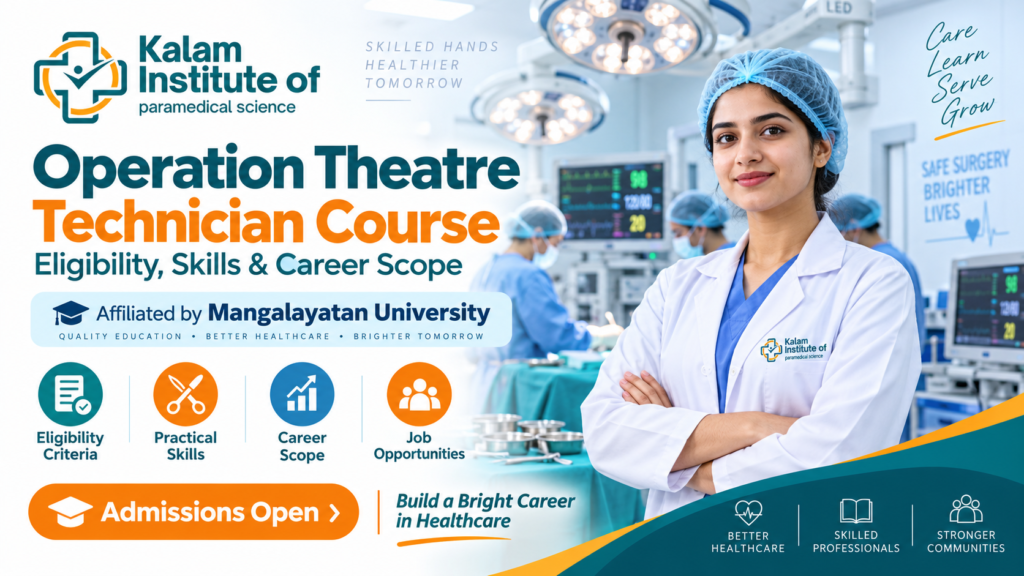
An operation theatre is one of the most important and highly controlled areas of a hospital. Before a surgical procedure begins, numerous things have to be prepared—from instruments and equipment to patient positioning, sterilization, and theatre safety. Behind this preparation is a team of trained healthcare professionals who help ensure that the surgical environment is ready.
If you are interested in healthcare and want to work in a surgical environment, an Operation Theatre Technician Course can be an interesting career option after Class 12.
Operation Theatre Technology is an allied healthcare field that prepares students to provide technical and clinical support during surgical procedures. Students learn about surgical instruments, sterilization, operation theatre procedures, patient preparation, equipment, infection control, and teamwork.
Mangalayatan University offers programs in Operation Theatre Technology through its paramedical education offerings. Its current 2026–27 information includes B.Sc. Operation Theatre Technology as well as an Advanced Diploma in Operation Theatre Technology.
This guide explains the course, eligibility, skills, subjects, career scope, job opportunities, higher-study options, and other important factors students should understand before choosing this field.
What Is an Operation Theatre Technician Course?
An Operation Theatre Technician Course is a specialized allied healthcare program designed to prepare students to work in surgical and operation theatre environments.
Operation Theatre Technicians work as part of a healthcare team and provide technical support before, during, and after surgical procedures.
Their responsibilities may include:
- Preparing the operation theatre
- Arranging surgical instruments
- Checking medical equipment
- Supporting sterilization procedures
- Preparing patients for surgery
- Maintaining a sterile environment
- Assisting the surgical team
- Handling and organizing surgical supplies
- Following infection-control procedures
- Supporting post-operative theatre preparation
The exact responsibilities depend on the professional’s qualification, workplace, training, and applicable healthcare protocols.
Why Choose Operation Theatre Technology?
Students interested in healthcare often think about becoming doctors or nurses. However, the healthcare sector also needs trained professionals who specialize in technical and clinical support.
Operation Theatre Technology can be a good choice for students who enjoy practical work and are comfortable working in a structured clinical environment.
Practical Learning
Operation Theatre Technology involves hands-on learning. Students learn about instruments, equipment, sterilization, patient preparation, and theatre procedures.
Healthcare Environment
Graduates can work in hospitals, surgical centres, emergency departments, and other clinical settings.
Specialized Career
Unlike general healthcare education, Operation Theatre Technology focuses on a specific area of hospital services.
Team-Based Work
Operation Theatre Technicians work closely with surgeons, anesthetists, nurses, and other healthcare professionals.
Opportunities for Growth
With experience, additional training, and higher qualifications, professionals may progress toward senior technical or supervisory responsibilities.
Operation Theatre Technician Course Eligibility
Eligibility depends on the specific program and institution.
For the current 2026–27 B.Sc. Operation Theatre Technology program at Mangalayatan University, the listed eligibility requirement is 10+2 with PCB/PCM and a minimum of 50% aggregate marks. The university also lists a minimum age of 17 years on December 31 of the admission year. (mangalayatan.in)
For the university’s Advanced Diploma in Operation Theatre Technology, the current information lists 10+2 with a minimum 50% aggregate in PCB/PCM. (mangalayatan.in)
Students should verify the latest admission notification before applying because requirements can change between academic sessions.
Eligibility at a Glance
Requirement | B.Sc. Operation Theatre Technology |
Qualification | 10+2 or equivalent |
Stream | PCB/PCM |
Minimum marks | 50% |
Course level | Undergraduate |
Duration | 3 years + internship |
Minimum age | 17 years* |
*Based on the current university admission information for 2026–27. Always verify the latest requirements before admission.
Operation Theatre Technician Course Duration
The duration depends on whether you choose a degree or diploma pathway.
Mangalayatan University currently lists:
B.Sc. Operation Theatre Technology: 3 years + internship
Advanced Diploma in Operation Theatre Technology: 2 years
A degree program generally provides a broader academic foundation, while a diploma offers a shorter specialized route.
Students should choose the program according to their academic plans and long-term career objectives.
Subjects in Operation Theatre Technology
The curriculum may differ between universities, but students generally study a combination of medical science, surgical procedures, equipment, patient care, and safety.
1. Human Anatomy
Students learn about the structure of the human body, including bones, muscles, organs, tissues, and body systems.
Understanding anatomy is essential because surgical procedures involve specific parts of the body.
2. Physiology
Physiology explains how different organs and body systems function.
This knowledge helps students understand what happens to the body before, during, and after surgery.
3. Surgical Procedures
Students learn about different types of surgical procedures and the role of the operation theatre team.
4. Surgical Instruments
Identifying and handling surgical instruments is an important part of Operation Theatre Technology.
Students learn about the purpose and proper handling of different instruments used during surgical procedures.
5. Sterilization and Disinfection
Sterilization is critical for reducing the risk of infection.
Students learn about sterilization methods, infection prevention, sterile techniques, and appropriate handling of instruments.
6. Anesthesia Technology
Students are introduced to anesthesia equipment, procedures, and the role of the anesthesia team in the operation theatre.
7. Patient Care
Patient preparation is another important area. Students learn how to prepare patients before surgery and provide appropriate technical support according to their professional role.
8. Operation Theatre Management
Students learn how an operation theatre is organized, including equipment, instruments, supplies, documentation, and workflow.
Skills Required to Become an Operation Theatre Technician
A successful Operation Theatre Technician needs both technical knowledge and professional skills.
Attention to Detail
Operation theatres require precision. Instruments, equipment, supplies, and procedures must be handled carefully.
Knowledge of Surgical Instruments
Technicians need to identify and understand the purpose of different instruments used during surgical procedures.
Sterilization Skills
Maintaining sterile conditions is one of the most important responsibilities associated with operation theatre work.
Communication Skills
Operation theatres involve multiple professionals working together. Clear communication is essential.
Teamwork
A technician works as part of a multidisciplinary team that may include surgeons, anesthetists, nurses, and other healthcare professionals.
Ability to Stay Calm
Surgical environments can be demanding. Professionals should be able to remain focused and follow established procedures under pressure.
Time Management
Operation theatres often operate according to carefully planned schedules. Efficient preparation is therefore important.
Physical Stamina
Theatre professionals may spend long periods standing and moving equipment or supplies. Physical stamina can be useful in this working environment.
What Does an Operation Theatre Technician Do?
The daily responsibilities of an Operation Theatre Technician can vary depending on the hospital and specialization.
Typical responsibilities may include:
Before Surgery
- Preparing the operation theatre
- Checking equipment
- Arranging instruments
- Ensuring required supplies are available
- Supporting patient preparation
- Checking sterilized instruments
During Surgery
- Providing technical assistance to the surgical team
- Handling instruments according to established procedures
- Maintaining sterile conditions
- Monitoring required equipment
- Supporting the surgical workflow
After Surgery
- Assisting with theatre cleaning and preparation
- Handling instruments according to sterilization protocols
- Restocking supplies
- Supporting documentation
- Preparing the theatre for the next procedure
The exact scope of duties depends on the professional’s training and workplace protocols.
Career Scope After Operation Theatre Technology
Operation Theatre Technology offers opportunities across different healthcare environments.
Graduates can potentially work in:
- Government hospitals
- Private hospitals
- Multi-specialty hospitals
- Surgical centres
- Trauma centres
- Emergency departments
- Specialty clinics
- Medical institutions
- Day-care surgical facilities
As surgical services expand and hospitals become increasingly specialized, trained technical support professionals remain an important part of the healthcare workforce.
Job Opportunities After Operation Theatre Technician Course
After completing an appropriate Operation Theatre Technology qualification, students can explore different job roles.
Operation Theatre Technician
The primary role involves supporting surgical procedures and maintaining the operation theatre environment.
Operation Theatre Technologist
With relevant qualifications and experience, professionals may take on broader technical responsibilities within surgical departments.
Surgical Technologist
Surgical technologists support surgical teams with instruments, equipment, sterile procedures, and theatre preparation.
Anesthesia Technician
Professionals with appropriate specialized education can work with anesthesia teams and support anesthesia-related equipment and procedures.
OT Supervisor
Experienced professionals may progress into supervisory positions involving staff coordination, equipment management, theatre scheduling support, and workflow.
Emergency or Trauma Technician
Some professionals may explore technical healthcare roles in emergency or trauma environments, subject to the required training.
Where Can Operation Theatre Technicians Work?
The work environment for Operation Theatre professionals can extend beyond a single hospital department.
Government Hospitals
Government hospitals and public healthcare institutions may recruit qualified technical healthcare personnel through their respective recruitment processes.
Private Hospitals
Private and multi-specialty hospitals have operation theatres for general and specialized surgeries.
Surgical Centres
Independent surgical centres may employ trained operation theatre professionals.
Trauma Centres
Trauma facilities require teams that can respond quickly to emergency surgical requirements.
Specialty Hospitals
Hospitals specializing in areas such as orthopaedics, cardiology, neurology, or other surgical disciplines may require operation theatre personnel.
Government Job Opportunities
A paramedical qualification can allow eligible candidates to explore government healthcare opportunities when relevant vacancies are announced.
Potential employers may include:
- Government hospitals
- Public health institutions
- Medical colleges
- Defence healthcare facilities
- Government research organizations
- State healthcare departments
However, government employment is not automatic after completing a course. Candidates must meet the specific qualification and recruitment requirements of the organization and position.
Private Sector Opportunities
The private healthcare sector offers a wide range of opportunities for Operation Theatre Technology graduates.
Possible workplaces include:
- Corporate hospitals
- Private hospitals
- Specialty hospitals
- Surgical centres
- Diagnostic and healthcare facilities
- Emergency-care facilities
Career progression in the private sector generally depends on qualification, practical skills, work experience, specialization, and employer requirements.
Salary After Operation Theatre Technician Course
Salary is one of the most common questions students ask before choosing a career.
However, there is no single fixed salary for every Operation Theatre Technician.
Earnings can vary depending on:
- Educational qualification
- Practical experience
- Specialization
- Employer
- City
- Type of hospital
- Job responsibilities
- Additional certifications
Fresh graduates generally begin in entry-level positions, while professionals with experience and specialized skills may qualify for higher-level roles.
Instead of choosing a course only because of its expected salary, students should consider long-term career growth, professional interest, job stability, and opportunities for skill development.
Higher Studies After Operation Theatre Technology
Students who want to continue their education can explore higher studies after completing an appropriate qualification.
Depending on their existing qualification and eligibility, possible options may include:
- Advanced diploma programs
- Bachelor’s degree programs
- Postgraduate healthcare programs
- Specialized surgical technology courses
- Anesthesia-related training
- Healthcare management programs
- Professional certifications
Higher education can help students gain deeper knowledge and prepare for specialized or supervisory positions.
Career Growth in Operation Theatre Technology
A career in Operation Theatre Technology can develop through education, experience, and specialization.
A possible progression could be:
Trainee → Junior OT Technician → OT Technician → Senior OT Technician → OT Supervisor → OT Manager
The actual career path varies according to the organization, qualification, professional experience, and responsibilities.
Developing expertise in specialized surgical environments can also provide opportunities for professional growth.
Why Study Operation Theatre Technology at Mangalayatan University?
Mangalayatan University offers Operation Theatre Technology programs through its paramedical education offerings.
Its current admission information includes a B.Sc. Operation Theatre Technology program and an Advanced Diploma in Operation Theatre Technology. The university describes its paramedical education as skill-oriented and focused on preparing students for healthcare environments. (mangalayatan.in)
The university’s Operation Theatre Technology information highlights areas such as:
- Surgical instrumentation
- Sterilization
- Anesthesia
- Patient care
- Operation theatre management
- Practical training
When comparing colleges, students should evaluate:
- Course curriculum
- Practical training
- Operation theatre facilities
- Laboratory infrastructure
- Clinical exposure
- Faculty
- Internship opportunities
- Fees
- Admission eligibility
- Career support
- Higher-study opportunities
How to Choose the Right Operation Theatre Technician Course
Before applying, consider the following factors.
Check the Course Curriculum
Make sure the program covers anatomy, physiology, surgical procedures, sterilization, instruments, anesthesia, patient care, and safety.
Look for Practical Training
Practical experience is extremely important in Operation Theatre Technology.
Evaluate Infrastructure
Check whether the institution provides appropriate laboratories, simulation facilities, instruments, and clinical exposure.
Verify the Qualification
Understand whether you are enrolling in a certificate, diploma, advanced diploma, or degree program.
Check Internship Opportunities
Clinical exposure can help students understand the actual workflow of an operation theatre.
Consider Your Long-Term Goals
If you want to pursue higher education later, check whether the qualification provides a suitable foundation for your planned next step.
Is Operation Theatre Technology a Good Career?
Operation Theatre Technology can be a suitable career for students who enjoy healthcare, practical work, medical equipment, and surgical environments.
It is particularly suitable for people who:
- Have an interest in medical science
- Prefer practical learning
- Work well in teams
- Pay attention to detail
- Can follow strict procedures
- Remain calm under pressure
- Are comfortable working in hospitals
The profession comes with significant responsibility. Sterility, safety, accurate preparation, and proper teamwork are essential.
Frequently Asked Questions
What is an Operation Theatre Technician Course?
It is an allied healthcare program that prepares students to provide technical support in operation theatres. The curriculum commonly includes surgical instruments, sterilization, patient preparation, equipment, anesthesia-related concepts, and operation theatre management.
Can I do an Operation Theatre Technician course after 12th?
Yes. Students who meet the science-subject and minimum-mark requirements can apply for eligible Operation Theatre Technology programs.
What is the eligibility for B.Sc. Operation Theatre Technology at Mangalayatan University?
For the current 2026–27 admission cycle, Mangalayatan University lists 10+2 with PCB/PCM and at least 50% aggregate marks, along with a minimum age of 17 years on December 31 of the admission year. (mangalayatan.in)
How long is the B.Sc. Operation Theatre Technology course?
Mangalayatan University’s current information lists the B.Sc. Operation Theatre Technology program as three years plus internship. (mangalayatan.in)
What does an Operation Theatre Technician do?
An Operation Theatre Technician supports the surgical team by preparing the theatre, arranging instruments and equipment, maintaining sterile conditions, assisting during procedures, and helping with post-operative theatre preparation.
Where can Operation Theatre Technicians work?
They can explore opportunities in government and private hospitals, surgical centres, trauma centres, specialty hospitals, and other healthcare facilities.
What skills are needed for an OT Technician?
Attention to detail, knowledge of surgical instruments, sterilization skills, teamwork, communication, time management, technical ability, and the ability to work calmly in a clinical environment are important.
Can I pursue higher studies after Operation Theatre Technology?
Yes. Depending on your qualification and eligibility, you can explore higher education, specialized training, advanced diplomas, bachelor’s or postgraduate programs, and healthcare management courses.
Conclusion
An Operation Theatre Technician Course can be a valuable starting point for students who want to build a career in the healthcare sector and are particularly interested in surgery and clinical technology.
From preparing surgical instruments and maintaining sterile conditions to supporting healthcare professionals during procedures, Operation Theatre Technicians perform important technical responsibilities within the surgical team.
With the right qualification, practical training, and professional experience, students can explore opportunities in hospitals, surgical centres, trauma facilities, and specialty healthcare institutions.
Mangalayatan University’s current offerings include B.Sc. Operation Theatre Technology and an Advanced Diploma in Operation Theatre Technology, providing students with different educational pathways in this specialized field. (mangalayatan.in)
If you are planning a healthcare career after Class 12, take time to understand the course curriculum, eligibility requirements, practical training, internship structure, and career opportunities before making your final decision.
The right education can give you the knowledge and practical foundation needed to take your first step toward a professional career in Operation Theatre Technology.