Medical Education | 6 min read
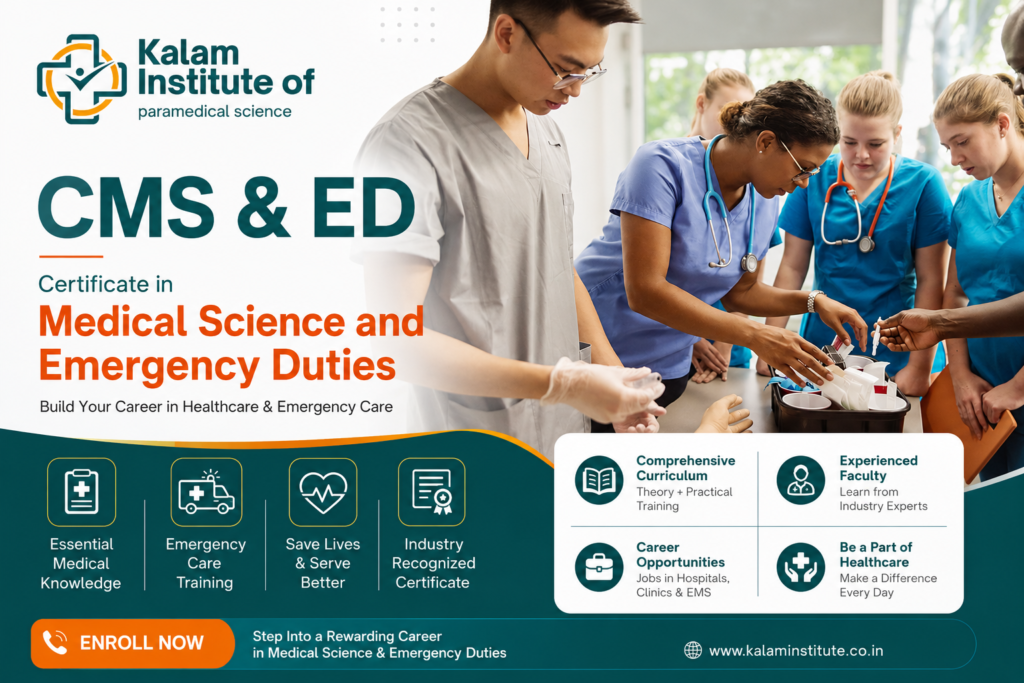
Healthcare depends on professionals who can respond calmly, confidently, and responsibly when patients need immediate support. The Certificate in Medical Science and Emergency Duties (CMS & ED) is designed to provide foundational knowledge in primary healthcare, emergency response, patient care, and essential clinical skills.
What Is CMS & ED?
CMS & ED is a healthcare training program focused on community-level medical support and emergency care. Depending on the institution, course structure and duration can vary, so prospective students should verify the current curriculum, accreditation, and scope of practice with the specific training provider.
The program commonly combines classroom learning with practical training, helping students connect medical theory with real-world healthcare situations.
Key Areas of Learning
Students may develop knowledge and practical skills in areas such as:
- Human Anatomy & Physiology — Understanding the body’s major systems and vital functions.
- First Aid & Basic Life Support — Learning appropriate immediate responses during emergencies.
- Emergency Patient Care — Recognizing urgent conditions and understanding when escalation or referral is required.
- Essential Medicines — Learning about commonly used medicines, their safe handling, and appropriate boundaries.
- Infection Prevention — Applying hygiene, sanitation, and infection-control principles.
- Patient Communication — Communicating effectively with patients, families, and healthcare teams.
- Community Health — Understanding preventive care, health education, and community-based healthcare needs.
Some CMS-ED programs also include fieldwork or internship components that provide supervised practical exposure.
Who Should Consider This Course?
CMS & ED may be suitable for learners interested in community healthcare, primary health support, first aid, and emergency-response fundamentals. Eligibility and course requirements differ between institutions, with some providers accepting students from secondary-school level and above.
Career & Further Learning
Training in community healthcare can provide a foundation for roles supporting healthcare delivery, health-awareness programs, clinics, and community initiatives, subject to the qualifications and legal requirements applicable in the relevant location.
It is important to remember that a CMS & ED certificate or diploma should not automatically be treated as equivalent to an MBBS or other university-level medical degree. Students should understand the exact recognition, professional scope, registration requirements, and permitted duties associated with their particular program before enrolling.
Why Emergency Skills Matter
In an emergency, early recognition and appropriate first response can make a meaningful difference. Learning how to assess a situation, provide basic assistance, communicate clearly, and arrange timely referral can help healthcare support personnel contribute more effectively to patient care.