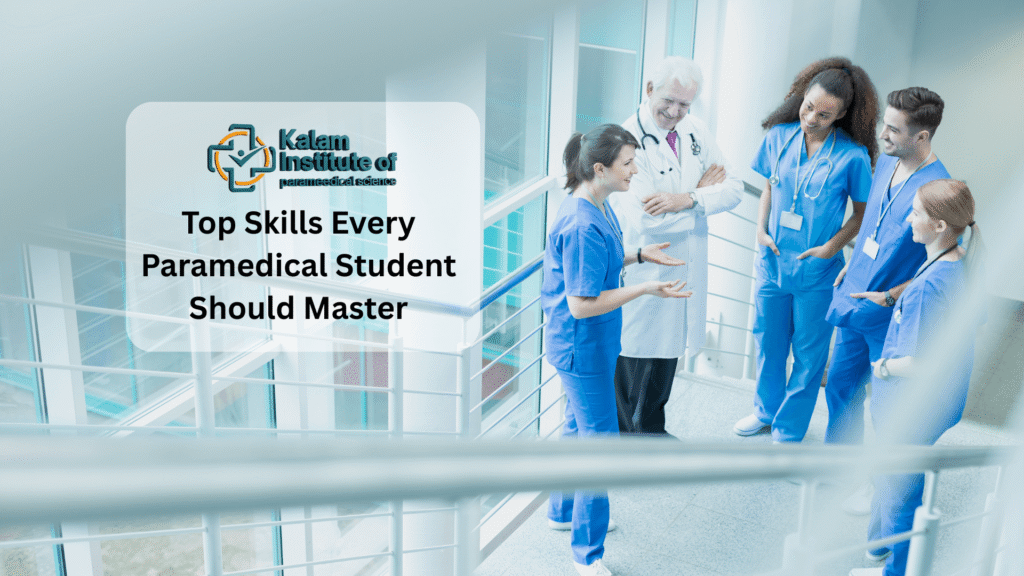
Top Skills Every Paramedical Student Should Master
Paramedical professionals play a crucial role in the healthcare system. They support doctors, operate medical equipment, assist patients, and help in diagnosis and emergency care. But beyond completing a course, mastering the right set of skills is what truly shapes a paramedical student into a competent professional. These skills not only improve job performance but also increase career opportunities in hospitals, clinics, labs, and emergency services.
Let’s explore the top skills every paramedical student must master to excel in their career.
Core Technical Skills
Technical skills form the backbone of paramedical professions. They ensure accuracy, safety, and efficiency in patient care.
Understanding Medical Terminology
Paramedical students must understand basic and advanced medical terms. It allows them to communicate effectively with doctors, nurses, and other healthcare professionals.
Diagnostic Equipment Handling
Whether it’s X-ray machines, ECG monitors, dialysis units, or lab analyzers, paramedics must know how to operate diagnostic tools correctly.
Sample Collection & Testing Techniques
From collecting blood and urine samples to performing tests, accuracy is essential. A small mistake can lead to incorrect results and diagnosis.
Patient Monitoring Skills
Monitoring pulse, blood pressure, temperature, and oxygen levels is a routine part of paramedical work. Precision is key here.
Emergency Care Procedures
In emergencies, quick actions can save lives. Skills like CPR, wound care, and stabilizing patients are must-haves.
Essential Clinical Skills
These skills ensure safe and hygienic patient care in clinical environments.
Infection Control Practices
Paramedics must maintain strict hygiene and follow infection control guidelines to prevent contamination.
Basic Life Support (BLS)
Knowing how to perform CPR, use an AED, and handle unconscious or choking patients is essential.
Patient Positioning & Mobility Support
Helping patients move safely, positioning them for tests, or assisting in mobility requires knowledge and care.
Sterilization & Sanitization Procedures
Correct sterilization prevents infections during surgeries and diagnostic processes.
Soft Skills for Paramedical Students
Soft skills help paramedics communicate better, work efficiently, and stay calm in stressful situations.
Communication Skills
Clear communication with doctors, patients, and families is vital.
Empathy & Compassion
Patients are often anxious or in pain. A compassionate approach helps them feel safe and supported.
Time Management
Paramedics juggle multiple tasks. Proper scheduling ensures nothing is overlooked.
Critical Thinking & Problem Solving
Healthcare situations can change quickly. Paramedics must think fast and choose the best actions.
Digital & Technological Skills
Modern healthcare relies heavily on digital tools, making technological skills crucial.
Electronic Health Record (EHR) Management
Paramedics often update patient records. Knowing how to use EHR systems is essential.
Operating Digital Diagnostic Tools
Machines like digital X-rays, automated lab analyzers, and telemedicine devices require technical understanding.
Basic Computer Knowledge
From data entry to report generation, computer proficiency is important.
Professional Ethics & Behavior
A good paramedic must follow professional ethics.
Confidentiality & Patient Privacy
Medical information must be handled with care and confidentiality.
Discipline & Teamwork
Healthcare is teamwork. Punctuality, discipline, and cooperation are vital.
Ethical Decision-Making
Paramedics often face tough situations where ethical judgment matters.
Practical Training & Internships
Importance of Hands-On Practice
Real-world training helps students understand practical challenges and builds confidence.
Learning from Real Healthcare Environments
Internships expose students to real patients, medical procedures, and equipment.
Continuous Learning & Certification
Upskilling for Better Job Opportunities
Advanced certifications help paramedics specialize and grow faster.
Importance of Attending Workshops & Seminars
These help students stay updated with new technologies and medical practices.
FAQs
1. Why are soft skills important for paramedical students?
Soft skills help improve communication, teamwork, and patient care.
2. Do paramedical students need computer skills?
Yes, as many hospitals use digital diagnostic tools and electronic records.
3. How can paramedics improve emergency skills?
Through regular practice, simulations, and certified training programs.
4. Is hands-on training necessary?
Absolutely. Practical experience is essential for building confidence and competence.
5. Which technical skills are most important?
Equipment handling, sample testing, emergency response, and patient monitoring.